
How Arrest Warrants Work in Richmond County
Virginia law gives a judge or clerk of Circuit, General District, or JDR Court, and magistrates too, the power to issue arrest process. It starts with a sworn complaint. Someone reviews the facts for probable cause. If the official signs off, the paper names the offense and the court, and it directs an officer to bring the person before a judge. Where the case goes next depends on the charge and the court named on the process. Richmond County publishes no public arrest-warrant roster of its own. Treat the state case service as a first lead only, and let the clerk or sheriff verify whether process actually exists.
How a Richmond County Arrest Warrant Complaint Reaches Court
The complaint usually comes in sworn or written form, and the complainant hands it to an official with authority to act. That judge, clerk, or magistrate weighs probable cause and fills in the offense, the court, and the command. A felony might start before a magistrate or in district court. After a preliminary hearing and an indictment, it can move up to Circuit Court. Misdemeanors generally stay put in General District Court unless a transfer or appeal sends them elsewhere. The Virginia district-court form index posts the blank warrant and affidavit forms.
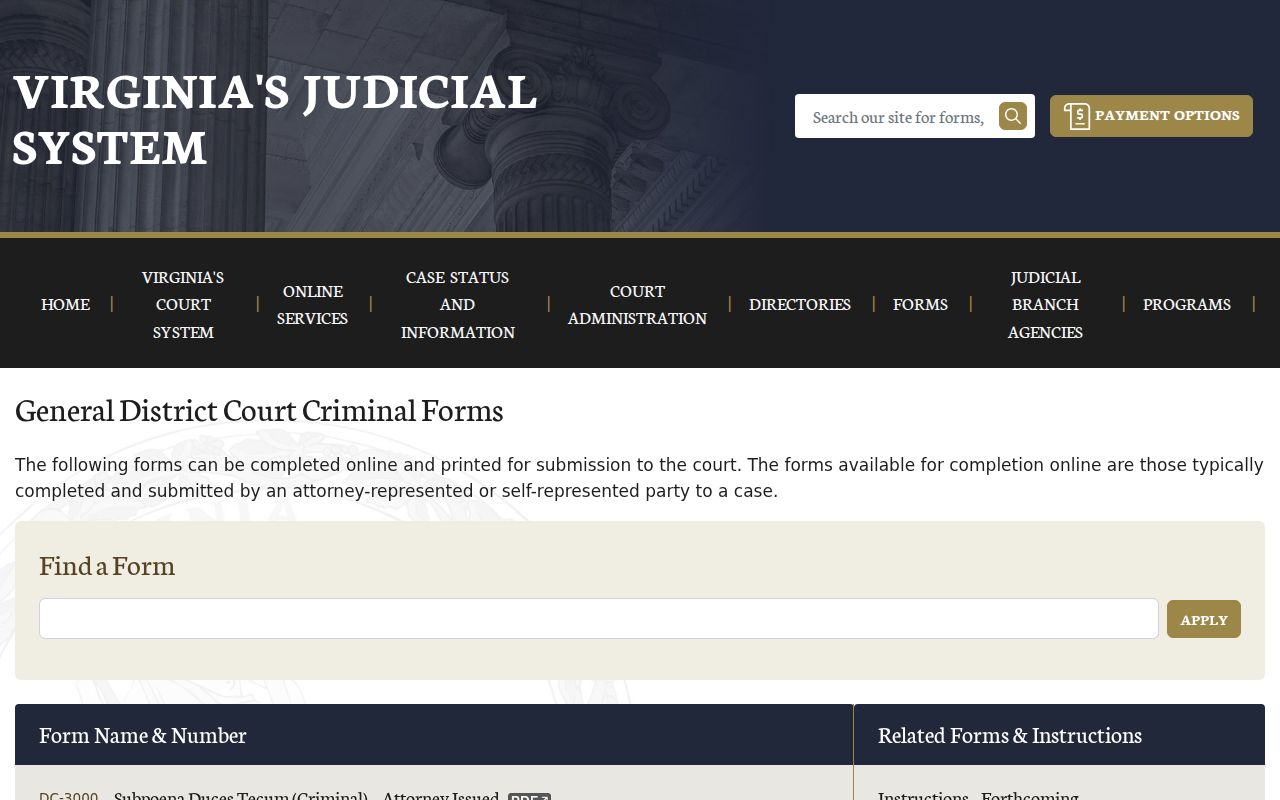
Blank forms show the fields and the process only; they are not a Richmond County person's actual record.
Richmond County Arrest Warrants: What They Contain
Virginia's forms show how the paperwork binds a person descriptor and a charge to one issuing court. A warrant can also carry issuance details, a judicial signature, release terms, and service and return entries. There is no fixed bond schedule for Richmond County and no local warrant-number guide. Work from the case or process number printed on the official paper. Ask the clerk when a field makes no sense to you.
| Process number | CASE NUMBER No local number format was found in the official sources reviewed. |
|---|---|
| Person and charge | Identifying details and the offense or order tied to the process. |
| Issuing court | Shows where to ask about the case, hearing, or release order. |
| Issuance | Date, signature, and official who authorized the process. |
| Release terms | May list bond type or conditions; confirm the current order with the court. |
| Service return | May show service, execution, or nonservice details entered by the officer. |
Richmond County Arrest Warrants Follow the Case Type
Follow the case type. The combined district-court clerk keeps adult traffic cases, misdemeanors, and felony preliminary hearings. The Circuit Court Clerk holds felony trial dockets and the permanent criminal files. A magistrate can issue process and handle first bail questions but is not the long-term record office. In Richmond County the sheriff executes local process, while the court alone controls status, bond, and any recall.
General District and JDR Clerk
Adult misdemeanors, traffic, preliminary hearings
804-333-4616
Circuit Court Clerk
Felony trial files and circuit criminal records
804-333-3781
How Warrants Get Served in Richmond County
Virginia Code §19.2-76 governs how warrants, capias, and summonses get executed. The Richmond County Sheriff's Office runs local service, and its Special Response Team lists high-risk warrant service among its functions. Warsaw Police handles its own duties inside town, with county dispatch identified on its official page. No separate town marshal or constable system operates here. Once an arrest happens, the person goes before the court or a magistrate for release decisions. Northern Neck Regional Jail takes custody and handles release processing at the facility. The jail does not set the underlying bond. It cannot recall the warrant either; that call belongs to the court.
Sealed and Search Warrants Have Different Access
Some papers stay out of view by design. A sealed indictment may not surface on a public docket until an authorized event opens it. An unexecuted search-warrant affidavit follows a separate inspection rule, and it concerns a search for evidence rather than an arrest. Juvenile and JDR cases carry confidentiality protections of their own. So a public search that returns nothing cannot rule out a sealed or restricted matter. Ask counsel or the issuing court instead of probing private details through a broad records request. The Virginia court forms offer blank schemas, not public examples of any person's case.
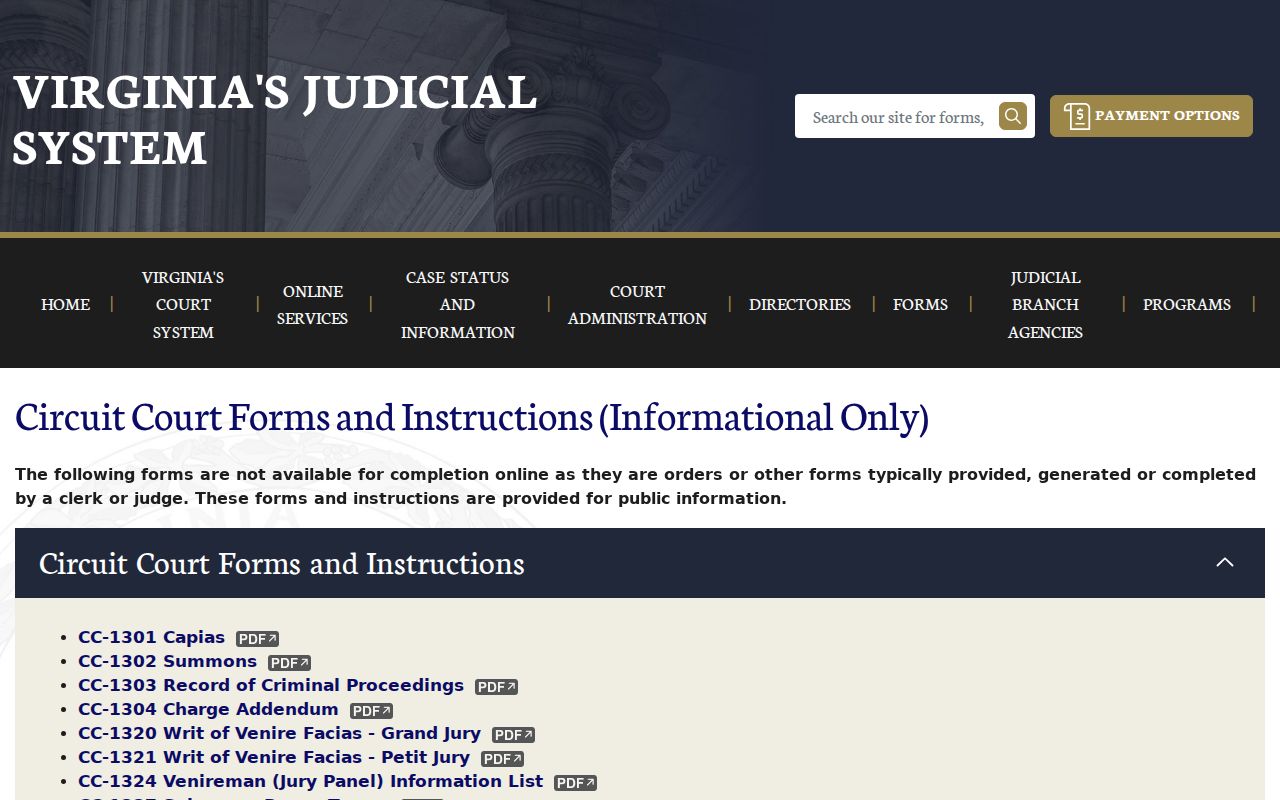
Do not treat form fields as proof that any particular warrant exists.
Arrest Warrants, Summonses, and Bench Warrants
These labels mark different starting points and different commands. A summons tells a person to appear. An arrest warrant, by contrast, orders an officer to bring someone before the court once probable cause is reviewed. People say "bench warrant" for a court's response to a missed date. Virginia forms often use the words capias or show-cause process instead. Ask for the exact name of the paper, and see the bench warrant process for the local missed-date route in Richmond County.
| Feature | Arrest Warrant | Summons | Bench Warrant |
|---|---|---|---|
| Command | Officer arrests and brings person to court | Person must appear on stated date | Officer brings person before court |
| Common basis | Sworn complaint and probable cause | Initial charge or court process | Missed setting or order violation |
| Virginia wording | Warrant of arrest | Summons | Often capias or show-cause process |
| Who confirms it | Issuing clerk or sheriff | Court clerk named on notice | Clerk handling the underlying case |
Richmond County Sheriff Handles Service Questions
The Richmond County sheriff's contact page posts a non-emergency number and a 24-hour warrants fax. Those channels have limits. The page does not promise that staff will confirm every warrant by phone, take a walk-in surrender, or quote a bond figure. Ask which office owns your specific question, and follow whatever instructions the clerk or sheriff give you. For custody matters, contact the jail about facility procedures. The official sheriff contact page lays out the operational routes.

A fax number is an operational channel for Richmond County, not a promise that any warrant will be recalled.
Handling an Arrest Warrant in Your Name
Call the clerk of the issuing court first. Get the case number, the process type, the next date, and any current release order in writing if you can. For a serious charge, reach a Virginia criminal-defense lawyer before you appear anywhere. Never assume the Richmond County sheriff's office or the jail will release you the same day. If the court directs a surrender, ask the sheriff or jail about the location, the documents, and release processing before you travel. Already in custody? Ask the jail about facility steps and ask the court about bond and the next hearing. Keep copies of notices, payments, and court orders. The county warrant overview pulls together local contacts and resolution questions for Richmond County.
Important: Verify the issuing court and ask counsel about timing before a voluntary appearance; the court controls bond and recall.
Plan a Richmond County Arrest Warrant Call
Before calling about a Richmond County arrest warrant, gather the basics: case number, court, charge type, and the date on the notice. Ask the clerk directly whether the warrant is still active and whether a judge or magistrate has set bond. Find out if an appearance or motion is required next. The clerk handles the public record and the schedule. A lawyer is the one to advise on strategy. If you get referred elsewhere, write down that office and its current phone number. Virginia allows secured and unsecured bond structures with court-set conditions. Richmond County posts no fixed amount for every arrest warrant, so skip generic bond quotes and third-party removal offers.